collaborative services

molecular tools for researchers, agencies, and conservation partners
[ lab photo ]

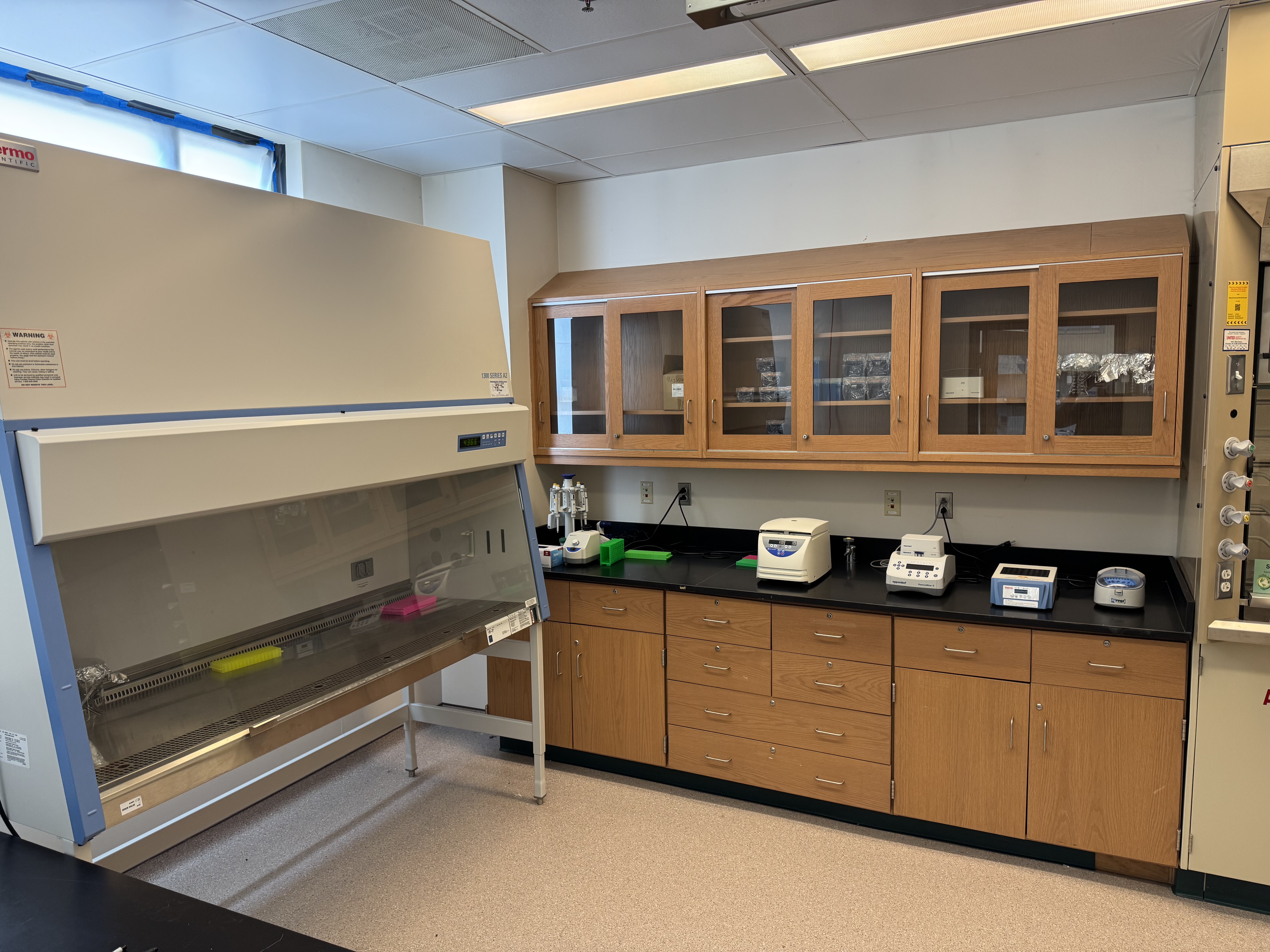
The MERGE lab offers collaborative molecular ecology services to researchers, state and federal agencies, and conservation partners. Our facilities at the Appalachian Laboratory are equipped for high-throughput sample processing and quantitative molecular assays.

Whether you need rapid species detection, genetic material for downstream analyses, or a full project partnership, we are open to discussing arrangements that fit your needs.

Please reach out using the contact information below to discuss your project.
DNA extraction

high-throughput tissue-to-DNA processing

[ DNA extraction photo ]
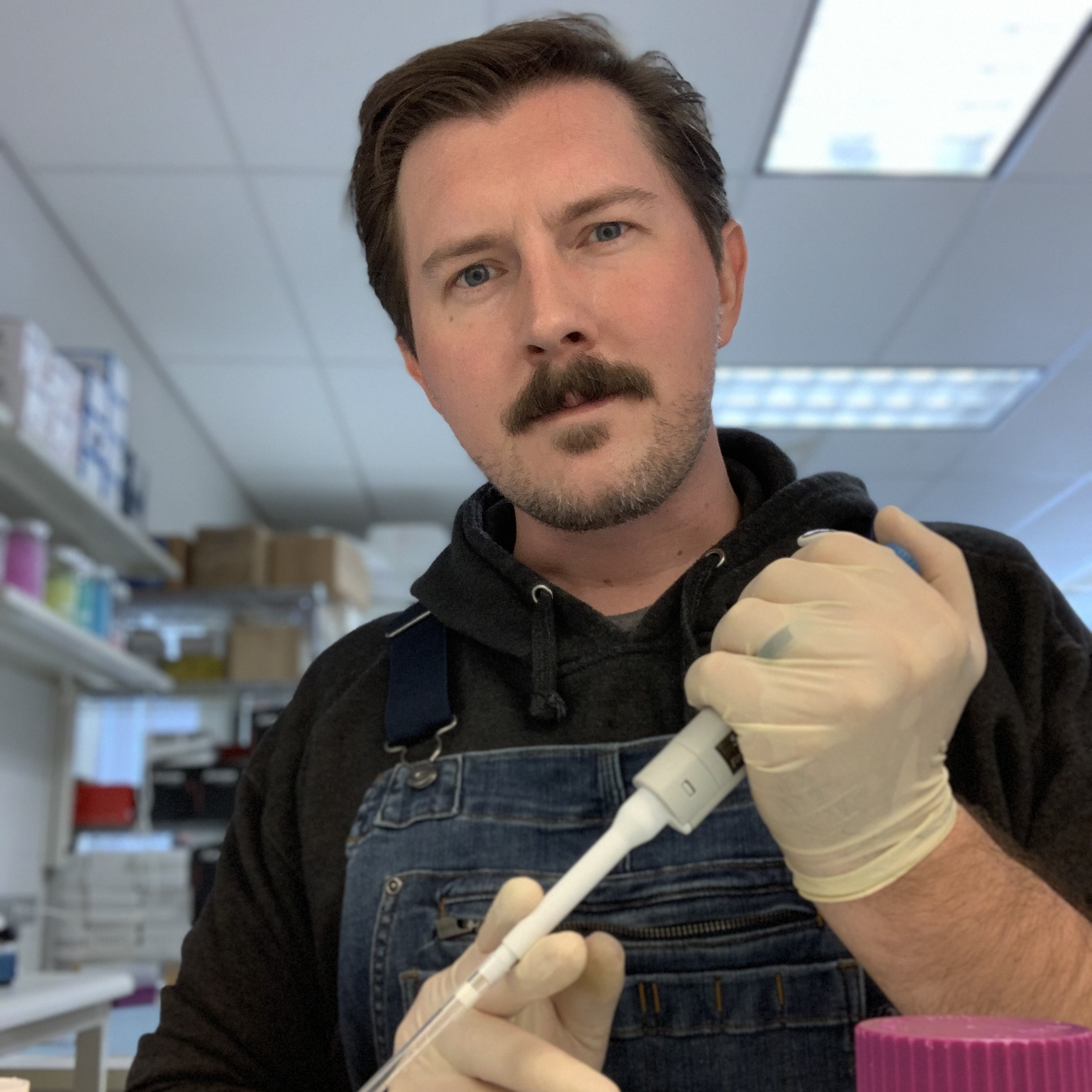
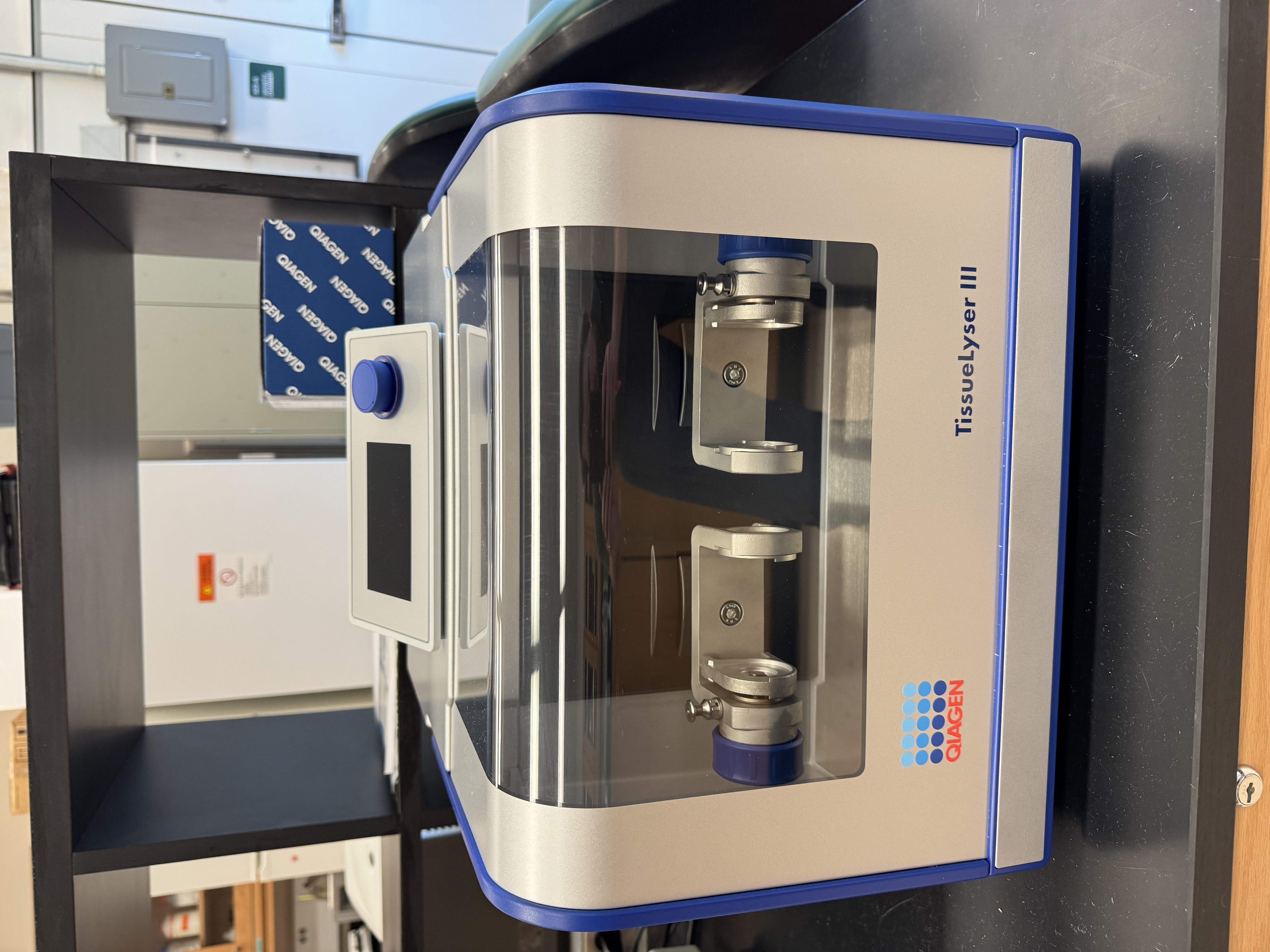
We offer DNA extraction services from a wide range of tissue types used in wildlife and fisheries research, including fin clips, blood, muscle, and liver. Extractions are quality-checked for concentration and purity, and we can accommodate both small and large sample sets.

Contact Zach at zach.zbinden@umces.edu to discuss your project.

RADseq library preparation

genome-wide SNP discovery for population genomics

[ RADseq library prep photo ]
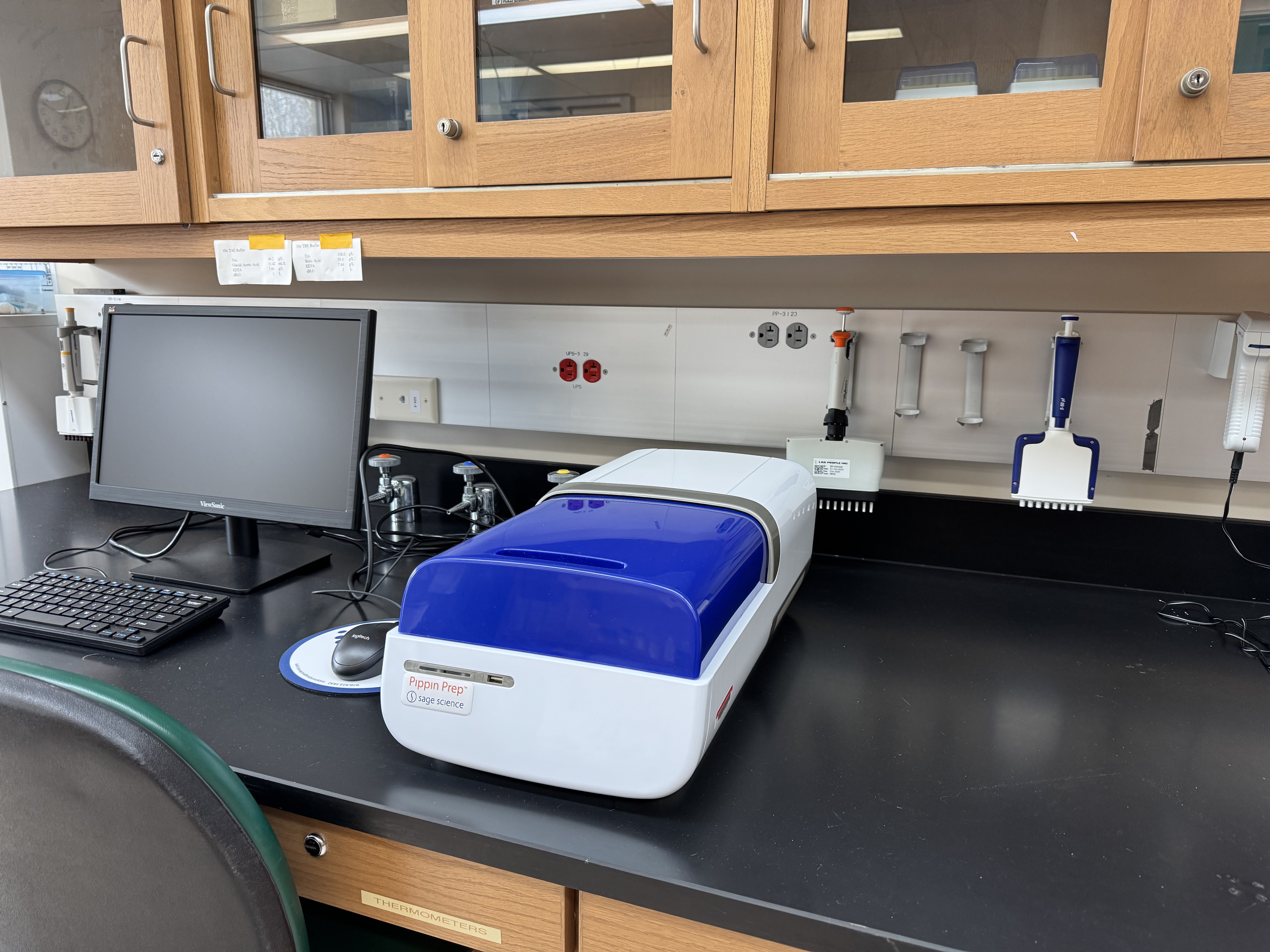
Restriction site-associated DNA sequencing (RADseq) generates thousands of SNP loci across the genome, enabling population genomic analyses at relatively low cost. We offer library preparation services covering restriction digestion, adapter ligation, size selection, and pooling for sequencing.

Contact Zach at zach.zbinden@umces.edu to discuss your project.

quantitative PCR

sensitive detection and quantification of target sequences

[ qPCR photo ]
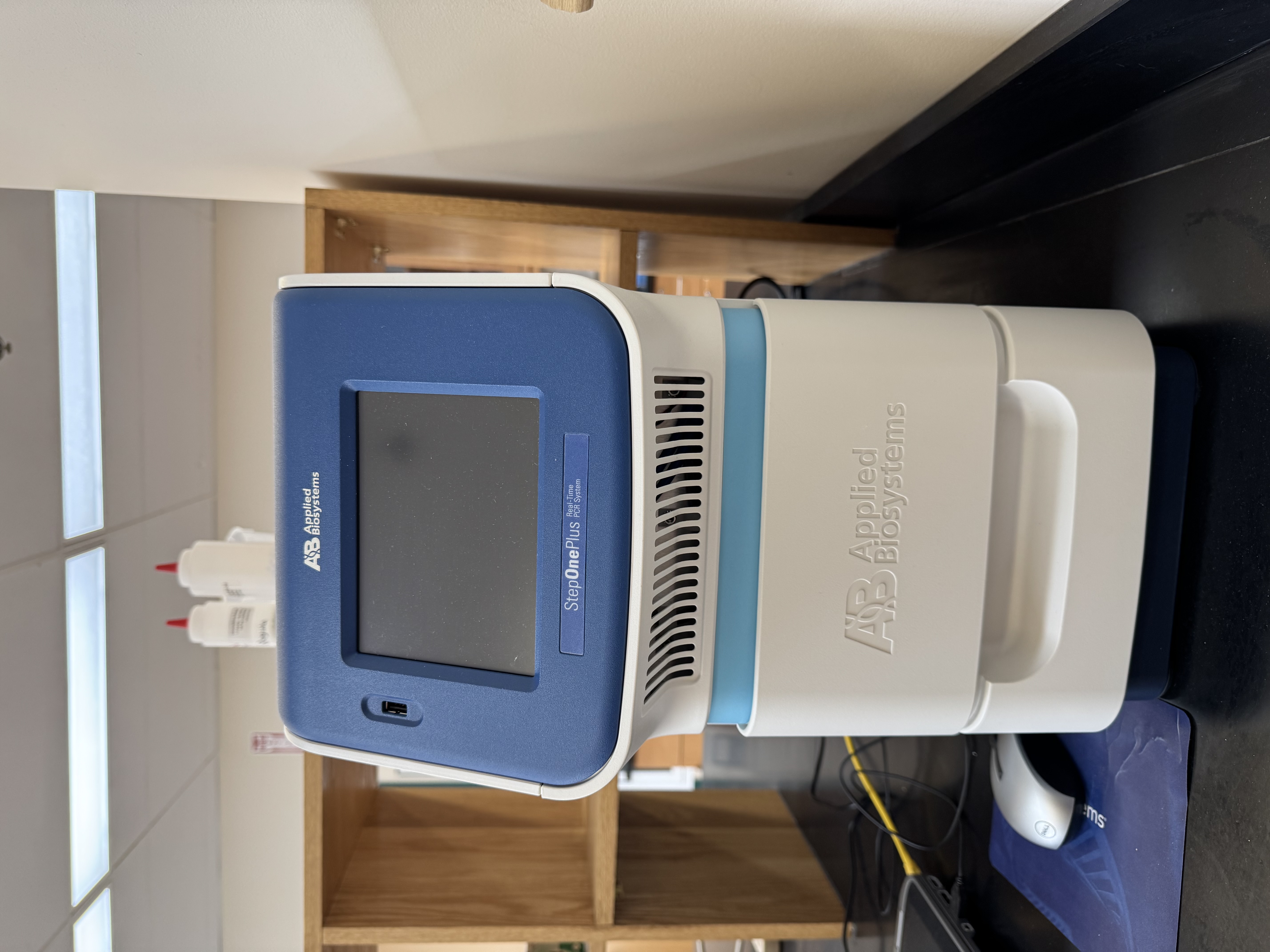
Quantitative PCR (qPCR) provides sensitive detection and quantification of target DNA sequences. We use qPCR primarily for eDNA species detection—identifying the presence of target species from filtered water samples—and can assist with assay development, validation, and sample processing.

Contact Zach at zach.zbinden@umces.edu to discuss your project.

metabarcoding

community-level biodiversity assessment from environmental samples

[ metabarcoding photo ]
Metabarcoding uses high-throughput sequencing of a standardized marker gene to simultaneously identify many species from a single environmental sample. Applications include stream macroinvertebrate community assessment, fish community profiling from water samples, and bulk tissue processing.

Contact Zach at zach.zbinden@umces.edu to discuss your project.